In this article
- Key Takeaways
- What Is B2B Content Marketing?
- Why Is Content Marketing Important for B2B Companies?
- High ROI for a Cost-Effective Channel
- Long Content Lifespan and Compounding Value
- Supporting Complex Buying Decisions
- Building Trust and Authority Over Time
- B2B Content Marketing vs B2C Content Marketing
- Different Audiences and Buying Cycles
- Different Tone and Messaging
- Different Formats and Depth
- Different Distribution Channels
- How B2B Content Marketing Works Across the Funnel
- Awareness Stage
- Consideration Stage
- Decision and Retention Stage
- Types of B2B Content Marketing
- Blog Posts and Evergreen Content
- Case Studies and Customer Stories
- White Papers and Industry Reports
- Educational Videos and Webinars
- Podcasts and Audio Content
- Email Newsletters and Drip Campaigns
- Testimonials and Social Proof
- Infographics and Visual Content
- Best Practices for a B2B Content Marketing Strategy
- Define Clear B2B Content Goals
- Research Your Target Audience and Buying Committees
- Conduct Competitive and SERP Analysis
- Create Content for All Funnel Stages
- Plan Distribution and Promotion
- Measure Performance and Optimize
- How to Build a B2B Content Marketing Strategy
- Create and Validate Buyer Personas
- Audit Existing Content
- Decide What Content to Create
- Choose Channels and Formats
- Set KPIs and Reporting Frameworks
- B2B Content Marketing Strategies That Work in 2026
- Thought Leadership and Industry Research
- Long-Form Guides and Resource Hubs
- LinkedIn and Professional Network Content
- SEO-Driven Commercial Content
- Email-Led Content Distribution
- Personalization and Account-Based Content
- Real-World B2B Content Marketing Examples
- Common Challenges in B2B Content Marketing
- Creating High-Quality Content at Scale
- Standing Out in Saturated Markets
- Aligning Sales and Marketing
- Measuring ROI and Attribution
- What Makes Great B2B Content Marketing?
- Relevance and Audience Fit
- Authority and Credibility
- Timing and Context
- Measurement and Continuous Improvement
- The Future of B2B Content Marketing
- Getting Started With B2B Content Marketing
- Frequently Asked Questions About B2B Content Marketing
- How do you make B2B content engaging?
- What types of content work best for B2B?
- How does content marketing support B2B sales?
- Why do B2B content strategies fail?
Key Takeaways
- B2B content marketing focuses on educating multiple decision-makers, building trust, and supporting long buying cycles rather than driving quick conversions.
- The most effective B2B strategies combine SEO, thought leadership, and consistent distribution to create long-term, compounding growth.
- In 2026, B2B content marketing succeeds when led by clear goals, strong execution, and experienced content managers who align marketing with sales and business outcomes.
What Is B2B Content Marketing?
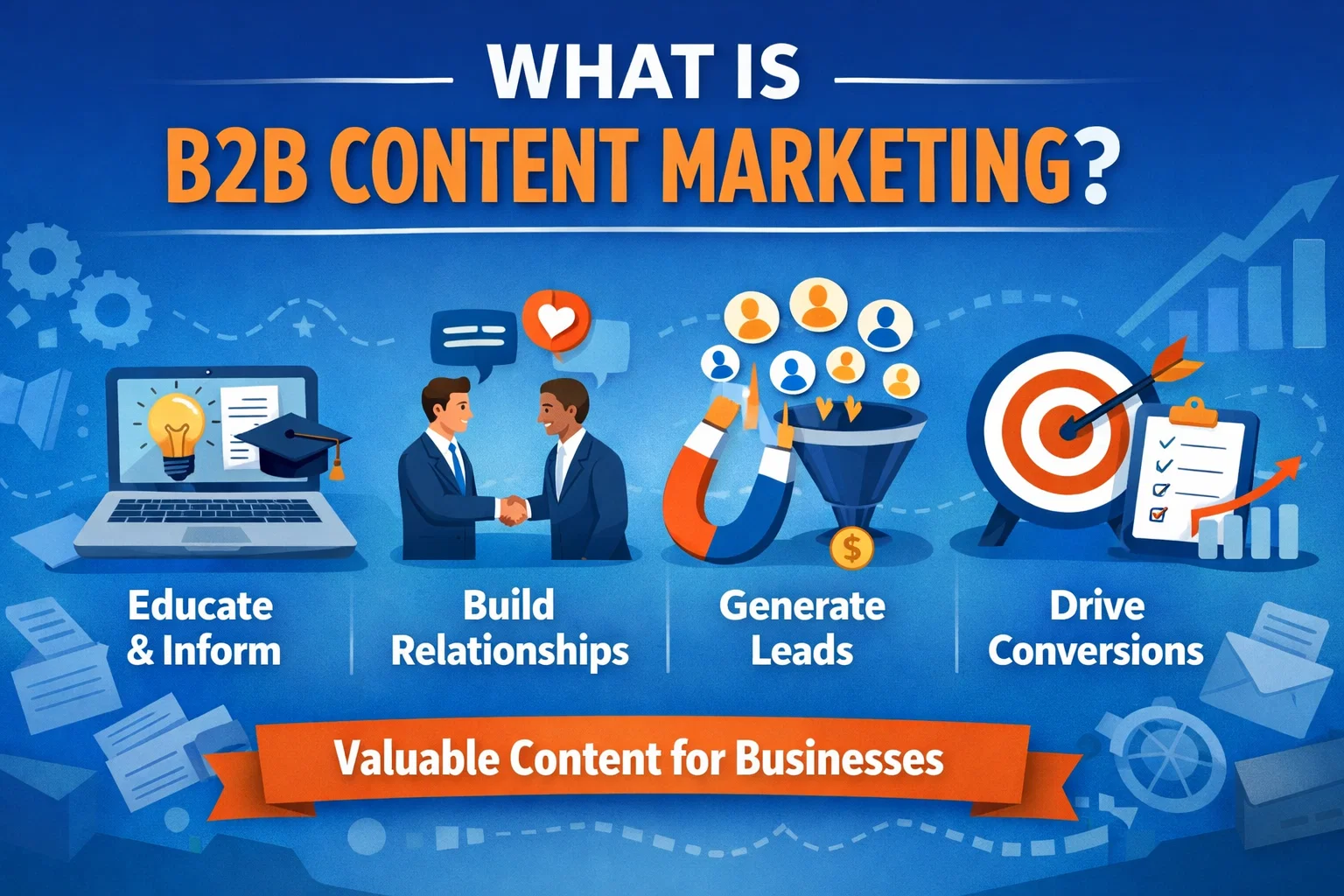
B2B content marketing is a strategic approach focused on creating and distributing valuable, relevant content to attract, engage, and convert other businesses. Unlike consumer marketing, B2B content marketing targets multiple decision-makers, longer sales cycles, and more complex buying processes.
The goal is not immediate conversion, but trust, authority, and education. Successful B2B content marketing supports sales teams, shortens decision cycles, and positions the brand as a reliable partner rather than just a vendor.
Why Is Content Marketing Important for B2B Companies?
High ROI for a Cost-Effective Channel
B2B content marketing delivers long-term value without the ongoing costs of paid acquisition. Once published, high-quality content continues to generate traffic, leads, and engagement over time.
Long Content Lifespan and Compounding Value
Evergreen B2B content compounds. A single guide, case study, or blog post can influence hundreds or thousands of buying decisions across months or years.
Supporting Complex Buying Decisions
B2B buyers research extensively. Content provides the education, reassurance, and clarity they need to move forward with confidence.
Building Trust and Authority Over Time
Consistent, high-quality content builds credibility. This is especially critical in competitive industries where trust is a deciding factor.
B2B Content Marketing vs B2C Content Marketing
Different Audiences and Buying Cycles
B2B content targets teams, committees, and professionals rather than individuals. Decisions take longer and involve more stakeholders.
Different Tone and Messaging
B2B content is typically more educational, data-driven, and outcome-focused than B2C content.
Different Formats and Depth
Long-form guides, case studies, and reports play a much bigger role in B2B than in consumer-focused marketing.
Different Distribution Channels
Professional platforms, email, search, and owned channels matter more than entertainment-driven networks.
How B2B Content Marketing Works Across the Funnel
Awareness Stage
At the top of the funnel, content introduces problems and opportunities. Blog posts, industry insights, and educational videos help prospects frame their challenges.
Consideration Stage
Mid-funnel content helps buyers compare options. White papers, webinars, and expert guides support evaluation and validation.
Decision and Retention Stage
Bottom-funnel content removes friction. Case studies, testimonials, onboarding resources, and product documentation support final decisions and long-term retention.
Types of B2B Content Marketing
Blog Posts and Evergreen Content
Blogs are the foundation of most B2B content programs. They support SEO, establish topical authority, and continuously attract qualified traffic. Well-structured blogs also enable internal linking and long-term discoverability.
Case Studies and Customer Stories
Case studies provide social proof and demonstrate real-world impact. They are especially effective during late-stage evaluation and sales conversations.
White Papers and Industry Reports
These long-form assets position brands as thought leaders. They are commonly used for lead generation and account-based marketing initiatives.
Educational Videos and Webinars
Video content helps explain complex topics and products efficiently. Webinars also allow direct interaction with prospects and customers.
Podcasts and Audio Content
Audio formats build deeper relationships over time and work well for executive audiences and niche industries.
Email Newsletters and Drip Campaigns
Email remains one of the most effective B2B distribution channels. It nurtures leads, reinforces expertise, and supports long-term engagement.
Testimonials and Social Proof
Reviews, quotes, and success stories reduce risk perception and increase trust during the decision-making process.
Infographics and Visual Content
Visual assets simplify complex data and improve shareability across presentations, sales materials, and social channels.
Best Practices for a B2B Content Marketing Strategy
Define Clear B2B Content Goals
Start with business objectives. Content should support pipeline growth, retention, expansion, or brand authority.
Research Your Target Audience and Buying Committees
Effective B2B content speaks to roles, responsibilities, and pain points across the buying team.
Conduct Competitive and SERP Analysis
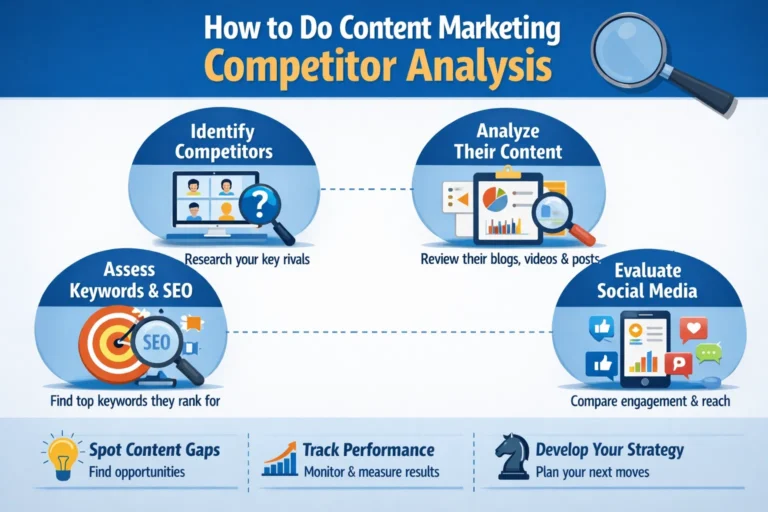
Understanding how competitors position themselves and where gaps exist is critical for differentiation.
Create Content for All Funnel Stages
Avoid focusing only on top-of-funnel traffic. Balanced strategies support awareness, consideration, and conversion.
Plan Distribution and Promotion
Content without distribution fails. SEO, email, partnerships, and social media strategy should be planned upfront.
Measure Performance and Optimize
Track engagement, lead quality, and conversion influence. Use insights to refine and improve continuously.
How to Build a B2B Content Marketing Strategy
Create and Validate Buyer Personas
Personas should be grounded in real data, not assumptions. Interview sales teams and customers when possible.
Audit Existing Content
Identify what already performs, what needs updating, and what can be removed or consolidated.
Decide What Content to Create
Prioritize content that aligns with business goals, search demand, and buyer needs.
Choose Channels and Formats
Select formats based on how your audience consumes information, not trends.
Set KPIs and Reporting Frameworks
Define success metrics clearly. This often requires collaboration between marketing, sales, and leadership.
B2B Content Marketing Strategies That Work in 2026
Thought Leadership and Industry Research
Original insights and data-driven content help brands stand out in crowded markets.
Long-Form Guides and Resource Hubs
Comprehensive resources support SEO and position brands as category authorities.
LinkedIn and Professional Network Content
Professional platforms remain key distribution channels for B2B visibility and engagement.
SEO-Driven Commercial Content
Commercial-intent content bridges the gap between marketing and sales, especially when guided by an experienced SEO consultant.
Email-Led Content Distribution
Email continues to outperform many other channels in lead nurturing and retention.
Personalization and Account-Based Content
Tailored content increases relevance and improves conversion rates in complex sales environments.
Real-World B2B Content Marketing Examples
High-performing B2B brands invest in consistency, depth, and audience understanding rather than chasing volume.
Common Challenges in B2B Content Marketing
Creating High-Quality Content at Scale
Scaling content without losing quality requires clear processes, ownership, and experienced content managers.
Standing Out in Saturated Markets
Differentiation comes from expertise, originality, and relevance, not frequency alone.
Aligning Sales and Marketing
Content performs best when sales teams actively use and support it.
Measuring ROI and Attribution
B2B attribution is complex. Focus on influence and contribution rather than last-click metrics.
What Makes Great B2B Content Marketing?
Relevance and Audience Fit
Authority and Credibility
Timing and Context
Measurement and Continuous Improvement
The Future of B2B Content Marketing
AI, automation, and personalization will continue to shape content marketing, but human expertise and strategic thinking will remain central.
Getting Started With B2B Content Marketing
Start with clear goals, invest in quality, and build systems that scale. B2B content marketing rewards patience, discipline, and consistency.
Frequently Asked Questions About B2B Content Marketing
How do you make B2B content engaging?
By focusing on real problems, clear insights, and practical value rather than promotional messaging.
What types of content work best for B2B?
Blogs, case studies, guides, webinars, and email campaigns consistently perform well.
How does content marketing support B2B sales?
Content educates buyers, builds trust, and supports sales conversations throughout the funnel.
Why do B2B content strategies fail?
Most fail due to lack of focus, inconsistent execution, or misalignment with business goals.