In this article
What Is a Digital Marketing Funnel?
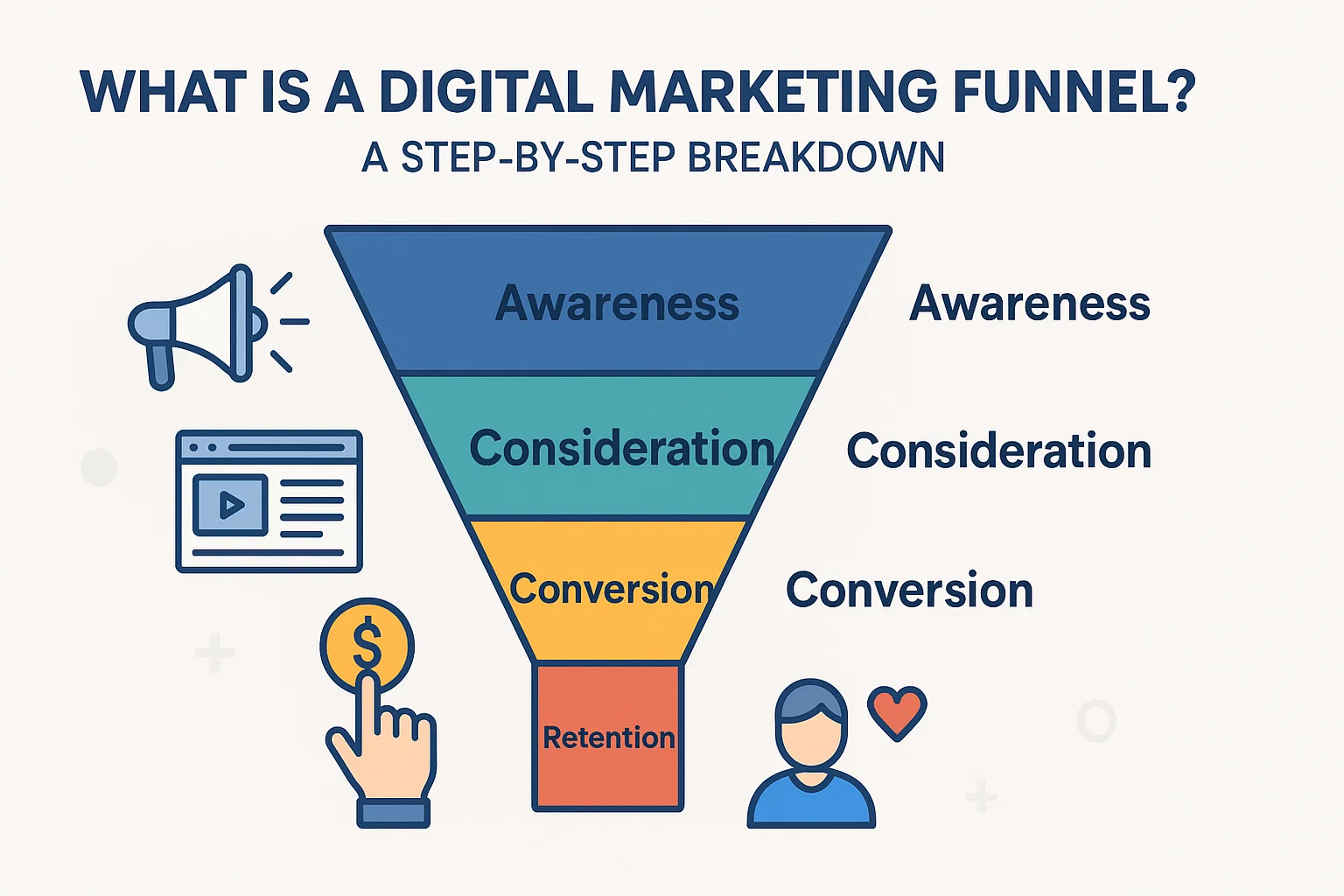
The digital marketing funnel is a strategic model that visualizes the customer journey. It maps out how potential customers discover your brand, engage with it, and eventually make a purchase or take action.
While funnels can vary by industry and platform, most follow a similar structure, often divided into three key stages: top, middle, and bottom.
Stages of the Funnel
1. Top of Funnel (TOFU) – Awareness
At this stage, the goal is to attract attention and drive traffic. Your audience may not even know they have a problem yet, let alone that your brand exists.
- Content types: Blog posts, social media content, YouTube videos, infographics
- Channels: Organic search (SEO), paid ads, social media, influencers
- Goals: Educate, entertain, introduce your brand
2. Middle of Funnel (MOFU) – Consideration
Now the user is aware of a problem or need and is researching solutions. This is your chance to show authority and build trust.
- Content types: Case studies, how-to guides, webinars, comparison pages
- Channels: Email campaigns, retargeting ads, downloadable content (eBooks, whitepapers)
- Goals: Nurture leads, demonstrate expertise, collect contact info
3. Bottom of Funnel (BOFU) – Conversion
At the bottom of the funnel, the user is ready to take action. The goal here is to remove friction and close the deal.
- Content types: Product demos, customer reviews, pricing pages, consultations
- Channels: Direct outreach, conversion-focused landing pages, chatbots
- Goals: Convert leads to customers
Beyond the Funnel: Loyalty & Advocacy
Some models extend the funnel to include post-sale stages like:
- Loyalty: Encourage repeat purchases through email marketing, loyalty programs
- Advocacy: Turn customers into promoters through referral programs, user-generated content
Tips for Building an Effective Funnel
-
- Use analytics tools (GA4, Adobe Analytics) to track behavior at each stage
- Automate nurturing flows using tools like n8n or HubSpot
- Tailor messaging per stage: don’t sell hard at TOFU
- Use retargeting to re-engage lost visitors
Final Thoughts
Understanding your digital marketing funnel is key to building a scalable and effective growth strategy. By mapping content and channels to each stage, you can turn casual visitors into loyal customers, and measure every step along the way.