In this article
- What Is SEO Automation?
- Which Parts of SEO Can Be Automated?
- Can SEO Be Automated With AI?
- What AI Is Good At in SEO
- What AI Still Gets Wrong
- Where Human SEO Expertise Is Still Required
- Why SEO Automation Matters in 2026
- What to Look for in an SEO Automation Tool
- SEO Tasks You Can Automate Today
- Keyword Research and Opportunity Discovery
- Content Ideation and Brief Creation
- On-Page SEO Checks and Optimization
- Technical SEO Monitoring
- Reporting and Dashboards
- Rank Tracking and SERP Monitoring
- Best SEO Automation Tools for 2026
- SEO Automation vs Traditional SEO Tools
- Are SEO Automation Tools Worth the Cost?
- Common SEO Automation Mistakes to Avoid
- Real-World Lessons From Automating SEO
- How to Build an SEO Automation Stack
- The Future of SEO Automation
- Is SEO Automation Right for Your Business?
- Related SEO and Growth Resources
LAST UPDATE: JANUARY 2026
What Is SEO Automation?
SEO automation is the use of tools, scripts, and workflows to handle repetitive SEO tasks at scale. Instead of manually pulling reports, checking rankings, or creating the same types of content briefs over and over, automation allows teams to focus on strategy, decision-making, and impact.
In modern teams, SEO automation supports developers, marketers, and content managers by reducing manual work and increasing consistency across large websites.
Which Parts of SEO Can Be Automated?
Not everything in SEO should be automated. The most effective automation focuses on execution and monitoring, while strategy and judgment remain human-led.
- Keyword research and opportunity discovery
- Content ideation and brief generation
- Technical SEO monitoring and alerts
- Rank tracking and SERP monitoring
- Reporting and dashboards
Can SEO Be Automated With AI?
AI has accelerated SEO automation, but it has not replaced SEO professionals. The reality in 2026 is hybrid SEO: AI handles speed and scale, humans handle direction and quality.
What AI Is Good At in SEO
- Pattern recognition in large datasets
- Drafting content outlines and briefs
- Automating reports and summaries
- Surface-level SERP analysis
What AI Still Gets Wrong
- Understanding true business intent
- Evaluating content quality and originality
- Making long-term strategic decisions
- Handling edge cases and technical complexity
Where Human SEO Expertise Is Still Required
SEO Managers, analysts, and SEO consultants remain critical for prioritization, validation, and aligning SEO with real business goals.
Why SEO Automation Matters in 2026
SEO has become more competitive, more technical, and more content-driven. Automation is no longer optional for teams managing hundreds or thousands of URLs.
- Scaling SEO without scaling headcount
- Reacting faster to technical and algorithm changes
- Improving consistency across large content libraries
- Supporting broader digital marketing strategies
What to Look for in an SEO Automation Tool
Not all automation tools are built for the same purpose. Choosing the wrong tool often leads to wasted time and misleading data.
- Clear use cases, not just features
- Reliable data sources
- Integrations with analytics, CMS, and workflows
- Control and customization options
- Pricing aligned with actual ROI
SEO Tasks You Can Automate Today
Keyword Research and Opportunity Discovery
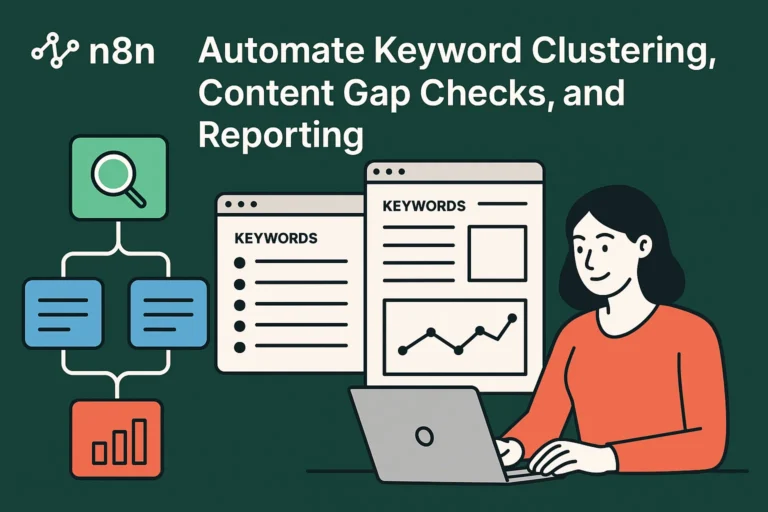
Automation can surface keyword clusters, detect gaps, and highlight opportunities faster than manual research alone.
Content Ideation and Brief Creation
AI-driven tools can generate outlines, FAQs, and optimization guidelines that help writers and editors move faster without starting from scratch.
On-Page SEO Checks and Optimization
Automated audits can flag missing metadata, internal linking issues, and content inconsistencies across large sites.
Technical SEO Monitoring
Crawl errors, indexation issues, and performance drops can be detected automatically and escalated before they impact traffic.
Reporting and Dashboards
Automation turns raw data into dashboards and summaries that stakeholders actually understand.
Rank Tracking and SERP Monitoring
Automated tracking helps teams spot volatility, new competitors, and SERP feature changes without manual checks.
Best SEO Automation Tools for 2026
SEO automation tools generally fall into four categories:
- All-in-one SEO automation platforms
- AI and content automation tools
- No-code and workflow automation tools
- Reporting and monitoring solutions
The best stacks combine multiple tools rather than relying on a single platform to do everything.
SEO Automation vs Traditional SEO Tools
Traditional SEO tools focus on analysis and insights. Automation tools focus on execution and scale. The strongest teams use both.
- Automation accelerates processes
- Traditional tools provide depth and validation
- Human oversight connects the two
Are SEO Automation Tools Worth the Cost?
For most teams, yes, but only when used correctly.
- Solo SEOs benefit from time savings
- In-house teams gain consistency and speed
- Agencies scale delivery without burnout
- Enterprise sites reduce operational risk
Common SEO Automation Mistakes to Avoid
- Over-automating without strategy
- Trusting AI outputs blindly
- Using poor or incomplete data
- Scaling broken SEO processes
Real-World Lessons From Automating SEO
Automation works best when it supports people, not replaces them. Teams that treat automation as an assistant consistently outperform those chasing full automation.
How to Build an SEO Automation Stack
There is no universal stack. The right setup depends on team size, site complexity, and goals.
- Minimal stack for small sites
- Advanced stack for growing teams
- Enterprise stack with custom workflows
The Future of SEO Automation
SEO automation is moving toward agent-based workflows, tighter integration with AI search, and deeper collaboration between SEO, content, and product teams.
Is SEO Automation Right for Your Business?
If your SEO workload is growing faster than your team, automation is likely the next step. When aligned with strong strategy and clear ownership, it becomes a competitive advantage.
Related SEO and Growth Resources
- SEO strategy and planning
- Content operations and governance
- Technical SEO foundations
- Analytics and performance tracking
- social media strategy and distribution