In this article
- Key takeaways
- What actually changed in Google Search in 2026?
- Why can a page rank third and never get cited?
- Does ranking still matter at all, then?
- What makes a page citation-ready?
- The four levers that earn citations
- What about schema and freshness?
- What did this actually do to one of my pages?
- What should you change this week?
Key takeaways
- Ranking in Google’s top 10 used to be the whole game. In 2026 it is the entry fee, not the win. Ahrefs’ own data shows the share of AI Overview citations coming from top 10 pages fell from 76% to 38% in seven months.
- Citation, not position, is the new currency. The work that earns it is answer-first writing, question-shaped headings, named specifics, and your own data near the top of the page.
- I rebuilt one of my own pages around these rules and watched it start showing up in AI answers it had been invisible in. The before and after is below.
A client called me in March, confused. Their flagship guide had sat at position two for its main keyword for almost a year. Rankings were steady. Traffic had fallen off a cliff anyway, down by roughly a third since the winter. Nothing in Search Console explained it through the old lens. Impressions were actually up. Clicks were down. The page was more visible than ever and getting visited less than ever.
That gap, impressions up and clicks down, is the signature of the thing that broke the old playbook. Google now answers the question on the results page itself, and your perfect position two sits underneath an answer the searcher never scrolls past. The page ranks. It just does not get the click. So the real question stopped being how do I rank. It became something harder: how do I become the source the answer is built from.
What actually changed in Google Search in 2026?
On 19 May 2026 at Google I/O, Sundar Pichai confirmed what the traffic data had been signaling for over a year. AI Mode is now the global default in Search, running on Gemini 3.5 Flash, rolled out across nearly 200 countries. The search box itself was rebuilt for the first time in over 25 years. It now takes long, conversational, multi-part questions instead of three-word keywords.
The scale is not a trial balloon. AI Mode passed a billion monthly users within a year of launch. By early 2026 nearly half of all Google searches triggered an AI-generated answer, up from around 30% a year earlier, according to BrightEdge tracking. This is the default experience for most searchers now, not an edge case you can wait out.
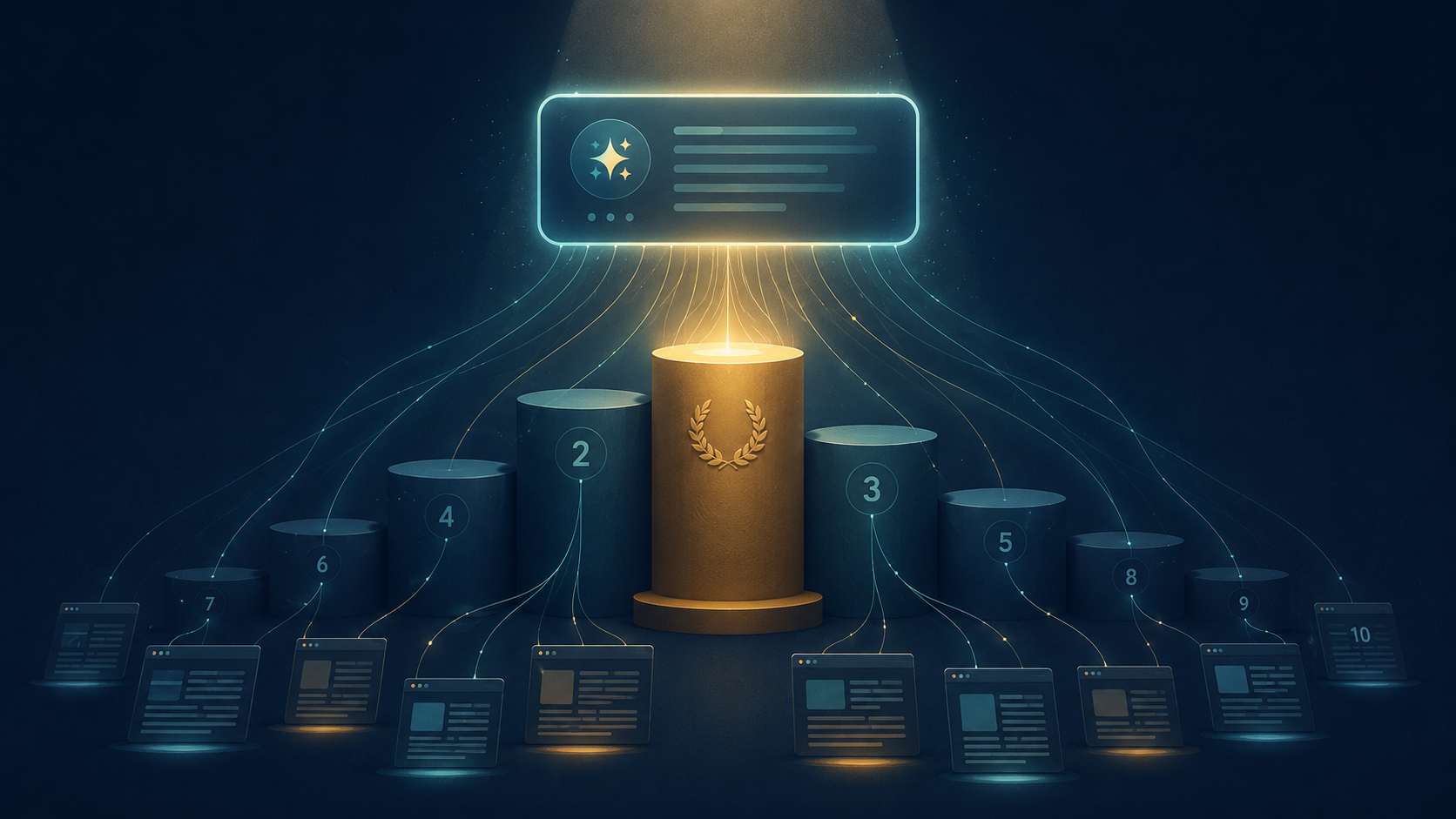
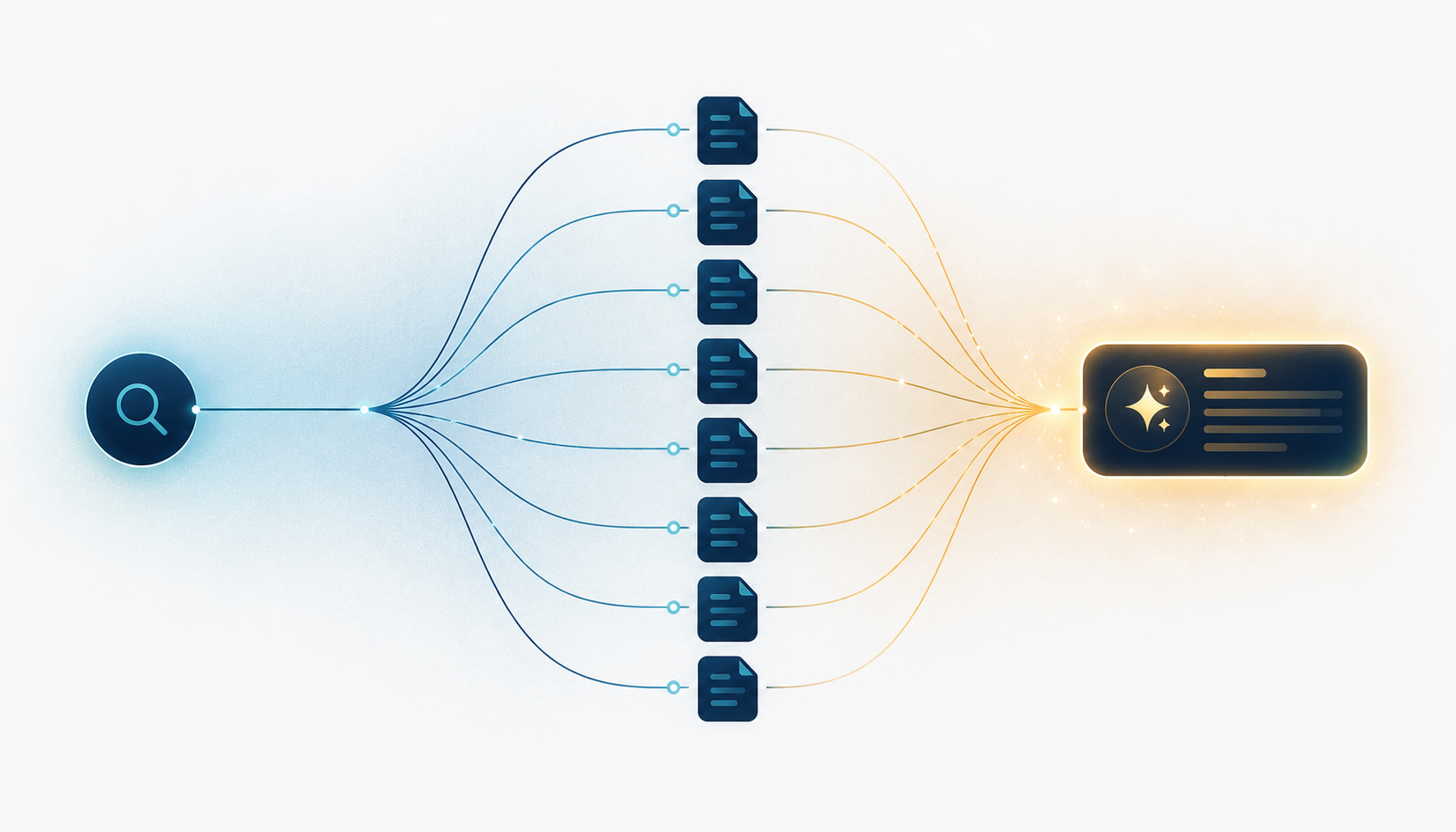
The mechanism underneath it is the part most marketers still have not internalized. AI Mode does not answer your query directly. It uses query fan-out. It breaks a single question into a spray of parallel sub-queries, runs them behind the scenes, and assembles one answer from whatever sources best satisfy those hidden sub-questions. Your page is no longer competing for one ranking. It is competing to be pulled into a dozen different mini-searches you never see, and then chosen as a citation in the synthesis.
Why can a page rank third and never get cited?
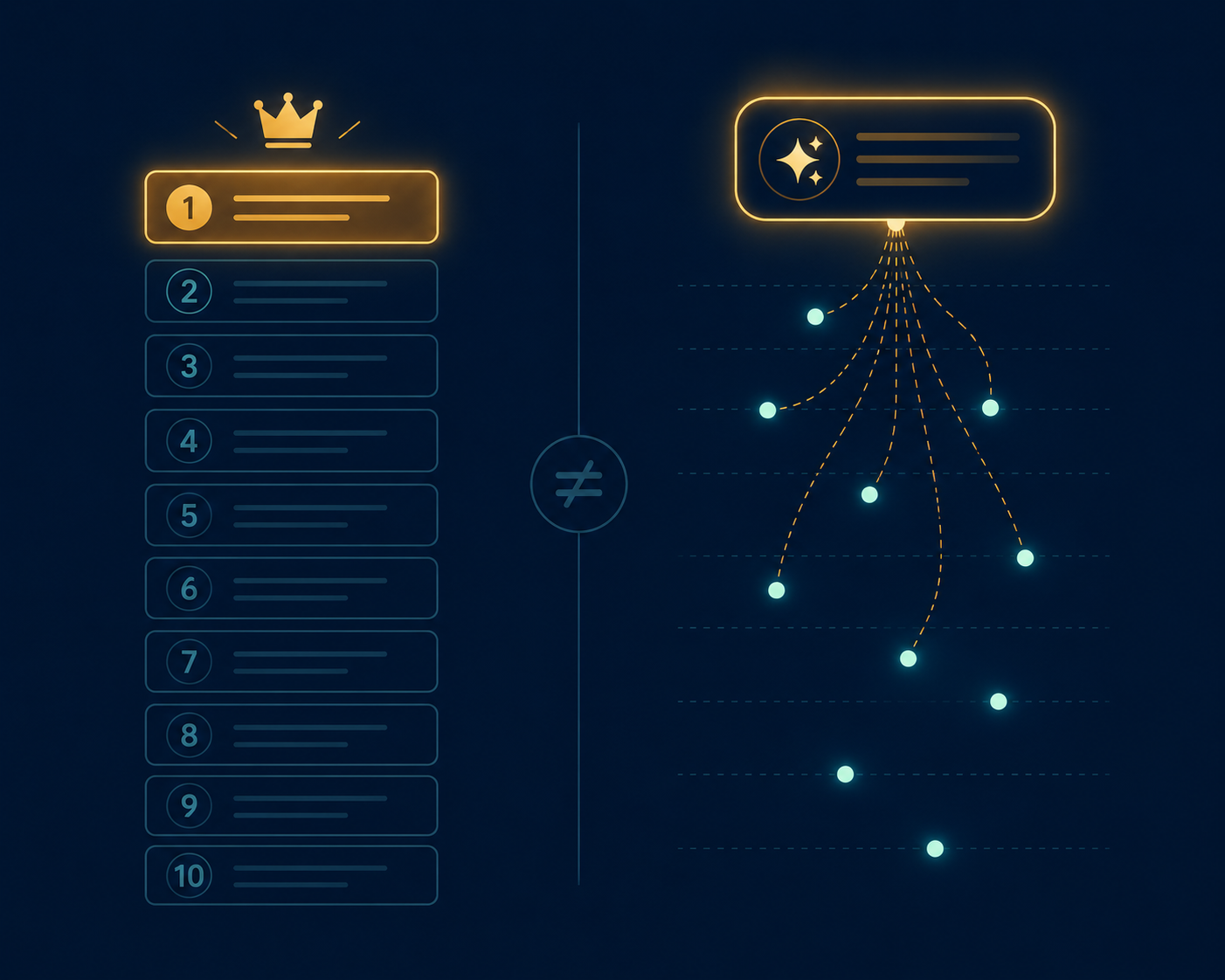
Because ranking and citation are now two different contests, judged on overlapping but distinct criteria, and the overlap is shrinking. This is where the data gets genuinely messy, and the mess is the point.
Ahrefs analyzed four million AI Overview URLs. About 38% of cited pages also rank in the organic top 10 for the same query. The rest split almost evenly between pages ranking 11 to 100 and pages that do not rank in the top 100 at all. Seven months earlier, that top 10 overlap had been 76%. Ahrefs is honest that part of the drop reflects better citation detection in their own tooling rather than pure change in Google’s behavior, so treat the exact figures as directional. But the direction is not in dispute.
Other researchers put the overlap even lower. BrightEdge’s tracking found only about 17% of AI Overview sources also rank in the organic top 10, a number that barely moved over a full year of measurement. Moz’s analysis of nearly 40,000 queries found that 88% of Google AI Mode citations were not in the organic top 10 for that same query. The studies disagree on the precise percentage because they measure different surfaces with different methods. They agree completely on the conclusion: a large share of what AI cites is not the stuff sitting at the top of the old blue-link list.
So a page can hold position three and never appear in the answer. Meanwhile a page buried on page three of the classic results gets cited because it answered one of the fan-out sub-queries cleanly. Position is now a filter that helps your odds, not a guarantee that decides them.
Does ranking still matter at all, then?
Yes, and dismissing it is the overcorrection that will cost people traffic. Strong organic visibility still feeds the candidate pool that AI draws from. SE Ranking’s modeling found that pages already ranking in Google’s top 10 are meaningfully more likely to get pulled into AI Mode. The same study found high-traffic domains were almost three times as likely to be cited as low-traffic ones. Gary Illyes from Google put it plainly: the work that makes you visible in traditional search is the same work that makes you eligible for AI answers. AI did not throw out the rules. It kept them as a first pass, then added a second contest on top.
The honest read across all of this conflicting data is that ranking is necessary but no longer sufficient. You still need to be in the room. You no longer get the deal just for being in the room.
What makes a page citation-ready?
The second contest rewards content that is easy for a machine to extract a clean, true, specific claim from. After rebuilding several pages around this, four levers did almost all the work.
The four levers that earn citations
The first is answer-first structure. AI extractors do not read your page evenly. Research compiled across more than 30 studies, and corroborated by Ahrefs, found that the majority of citations come from the top portion of a page. Gemini also applies a tight retrieval cap per URL, meaning content near the top is far more likely to be the part that gets pulled. The practical move is to open every section with a direct, standalone sentence that answers the heading, then expand underneath. If the answer to “what is X” sits in paragraph four under a warm-up anecdote, it will not be the sentence that gets cited. This sits in slight tension with classic narrative writing, where you build to the point. The fix is to make the opening line itself carry a real, liftable answer instead of a tease.

The second lever is question-forward headings. Because fan-out turns one query into many sub-questions, headings phrased as the actual questions a person asks map directly onto those sub-queries. “Why can a page rank third and never get cited” is a heading a machine can match to a real sub-query. “Citation dynamics” is not. Write your H2s and H3s the way your reader would speak them out loud.
The third lever is specificity, named entities and dated numbers. AI extractors consistently favor “citations from top 10 pages fell from 76% to 38% between mid-2025 and early 2026” over “citations from top pages have declined recently.” Vague sentences do not get cited because they carry no verifiable information. Name the people, the products, the studies, and the dates. Replace “many,” “most,” and “often” with the actual figure wherever you honestly can.
The fourth lever is information gain, your own data or a named expert view. The single thing that separated my rebuilt page from the dozen interchangeable explainers around it was a number nobody else had: my own before and after. When you publish something the other sources cannot, you become the page the model has to cite to make that specific point. Original research, first-party numbers, and a real expert quote turn a competent summary into a necessary source.
What about schema and freshness?
Both pull weight, and both are cheap to add. SE Ranking found that roughly 65% of pages cited by Google AI Mode include structured data markup, with FAQPage, HowTo, and Article schema mapping especially well onto fan-out sub-queries. Freshness matters more in AI search than it did in classic SEO, because these systems lean toward recency. Pages cited by AI tend to be meaningfully fresher than what ranks organically, and on ChatGPT specifically a large majority of the most-cited pages were updated within the last 30 days. Refreshing a strong older guide with current data can restore its visibility even when its ranking position does not move at all.
What did this actually do to one of my pages?
I took one of my own guides that ranked respectably and was getting quietly ignored by AI Mode. The core argument stayed untouched. What changed was the structure. Every section now opens with a one-sentence answer. The label-style headings became the real questions people ask. Dated figures and named sources replaced the spots where I had been vague. I added FAQPage schema, and dropped in one piece of first-party data I had not published anywhere else.
None of that was about chasing a keyword. The whole point was extractability. Within a few weeks the page started surfacing in AI answers for several of the sub-questions it had never appeared in before, while its classic ranking barely shifted. That is the whole lesson on one page. The ranking was already there and was not the bottleneck. Extractability was.
What should you change this week?
Pick your most important page, the one whose lost traffic actually hurts, and read its first sentence under each heading as if you were a machine with a strict word budget and no patience. If the answer is not right there, move it there. Rewrite the headings as questions. Find every vague claim and either attach a real number and source or cut it. Then add one thing to that page that exists nowhere else on the internet, a number you measured, a result you got, a view only you can credibly state.
Ranking number one was a finish line for 20 years. It is now a starting position. The teams that keep treating it as the finish will keep watching their impressions climb while their clicks bleed out, blaming an algorithm update that is not the real story. The real story is that the answer moved, and the only way back into it is to be the source worth quoting.