In this article
- Most companies treat conference participation as an event. The ones that grow treat it as a content production cycle.
- The real ROI is not in the room. It is in everything you publish before, during, and after it.
- A single appearance can generate six to eight content assets if you plan the production before you book the flight.
You spent budget on the sponsorship. Your CEO or a senior leader flew in, spoke for twenty minutes, shook hands, and came home. Two weeks later, someone asks what you got out of it. You send over a photo from the event photographer and a vague mention in a LinkedIn post.
That is not a content strategy. That is a receipt.
Conference participation is one of the most underused content production opportunities in B2B marketing, and the gap between companies that extract full value from it and companies that do not comes down to one thing: whether you treat it as an event or as a campaign.
Why most companies leave the value on the floor
The mistake is not attending the wrong conferences. The mistake is arriving without a production plan. Most marketing teams brief the spokesperson on talking points, arrange the booth, and then wait to see what happens. Content becomes reactive. Someone grabs a clip from the talk, someone posts a selfie on the day, and the whole thing wraps up with a “great to be here” LinkedIn update that gets fourteen likes.
The problem with this approach is not that it produces bad content. It is that it produces almost none. A conference appearance is a compressed window of genuine authority. Your brand is in a room with the exact audience you want to reach, your spokesperson is on record saying something credible, and the context gives everything you publish a level of legitimacy that no blog post written at a desk can replicate. If you do not capture that window deliberately, it closes and it does not reopen.
Planning the content production before the event is not a nice-to-have. It is the only way to make the participation pay for itself.
What to produce before you even arrive
The pre-event window is where most of the distribution leverage lives, and most companies ignore it entirely.
Start with a speaker or participation announcement post for LinkedIn and your company page at least ten days before the event. This is not a promotional post. It is a positioning statement. Frame it around what your spokesperson will be addressing, what problem they are walking in to talk about, and why it matters to the audience attending. Done well, this post will be read by people who are not attending the conference but are interested in the topic. That is free reach on a captive subject.
Pair that with a short pre-event article on your site. The format is simple: what your company believes about the main theme of the conference, written by the person who is going to speak. It does not need to be long. It needs to be specific and it needs to have a point of view. This article serves two purposes. It gives journalists and attendees something to read before they meet you, and it gives you an internal link anchor for everything you publish after the event. This is exactly the kind of content that a content manager should be commissioning two weeks before the trip is booked, not two days before the flight.
What to capture on the day
The event itself is a production shoot. Treat it like one.
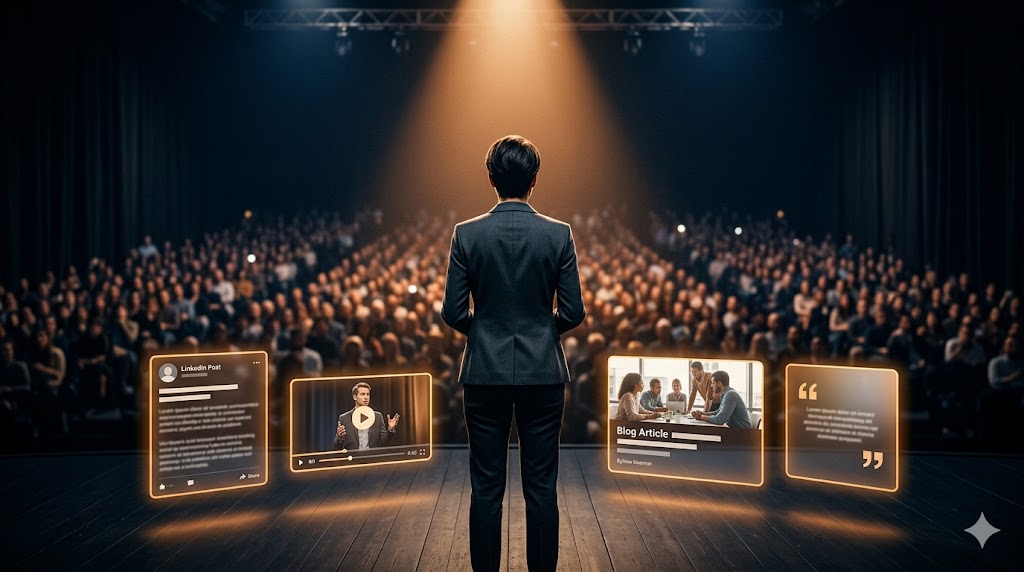
The single most valuable asset you can capture is a clean recording of the talk or panel. If the organizer is not recording, bring someone with a phone and a lapel mic and record it yourself. A twenty-minute talk contains enough material for a blog post, three to five short-form video clips, a LinkedIn carousel, and a pull-quote image set. None of that exists without the recording.
Beyond the talk, capture short-form video reactions. Two to three minutes of your spokesperson standing somewhere quiet after their session, answering one question: what was the most surprising thing that came up in the room today? This format works because it is honest and it is timely. You are not reading from a script. You are reporting from the field, and that context is something your audience cannot get anywhere else.
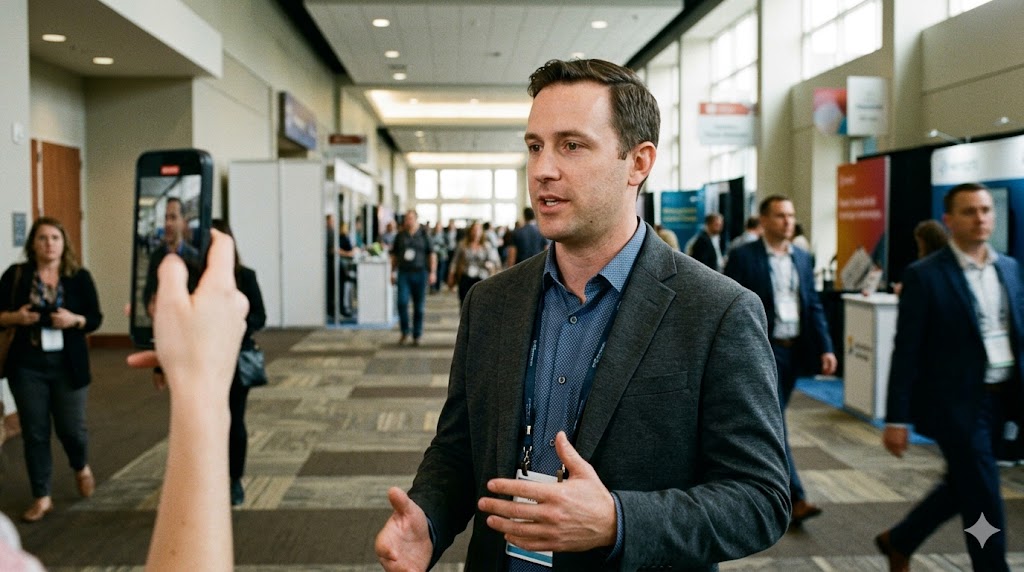
If you have a booth or hosted a side meeting, document it visually. Not posed photos. Candid shots of real conversations. The image that builds trust is not your banner stand. It is your person leaning across a table explaining something to someone who looks genuinely interested.
How to turn one event into eight content assets
The post-event production window is where the real work happens, and it needs to start within 48 hours while the context is still fresh and the event is still searchable.
The talk recording becomes a long-form article. Not a transcript, an article. Pull the three or four sharpest arguments from the presentation, add the context that did not make it into the twenty-minute slot, and publish it under the speaker’s byline. This is your most authoritative piece of post-event content and the one most likely to earn citations and backlinks because it carries a conference as its source context.
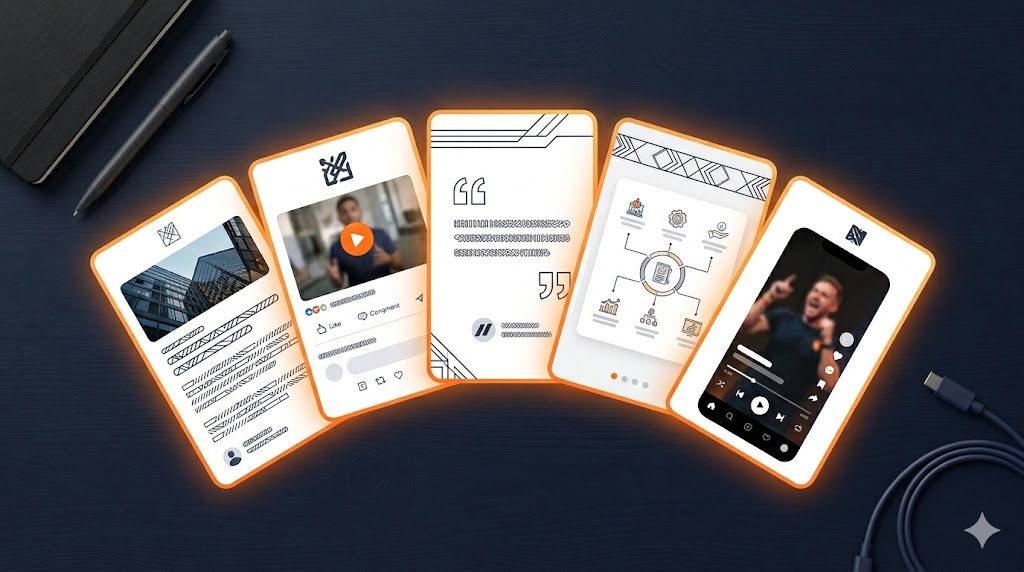
The recording also becomes clips. Cut the sharpest ninety seconds from the talk, add captions, and publish it as a standalone LinkedIn video or Reel. If your social media strategy is running correctly, this clip goes out within 24 hours of the event ending, while the conference hashtag is still active and attendees are still sharing their own content from the day.
The conversations you had in the room become a follow-up piece. Write a short article titled something like “Three things the [Industry] conference confirmed about where [Topic] is heading.” This format is easy to produce, it names the event for search relevance, and it gives you a reason to reach out to the people you met, because you can send them the article as a natural follow-up to the conversation you had in person.
The pre-event article you published gets updated with a post-event note and a link to the talk summary. That single update refreshes the page for search, adds internal link depth, and closes the content loop cleanly.
Finally, the whole campaign becomes a case study or a process document for internal use. How did you approach the event? What content performed? What would you do differently? This document has no public audience but it has enormous operational value, because the next time someone asks whether a conference is worth the budget, you have a documented answer instead of a guess. This is the kind of systematic thinking that separates teams running a real digital marketing operation from teams running a series of one-off campaigns.
The question your leadership will stop asking
When you run conference participation as a content production cycle, something changes in how leadership sees it. The question stops being “what did we get out of that event?” because the answer is visible. There is a pre-event article, a talk summary, a clip series, a follow-up piece, and a measurable lift in branded search around the dates of the event. The ROI conversation becomes about optimization, not justification.
That shift does not happen because you attended a better conference. It happens because you decided in advance that you were going there to produce content, and you built the plan around that decision.
The next conference on your calendar is either a receipt or a campaign. The difference is entirely in what you do before you book the hotel.